

 REQUEST INVITE
-4.png)
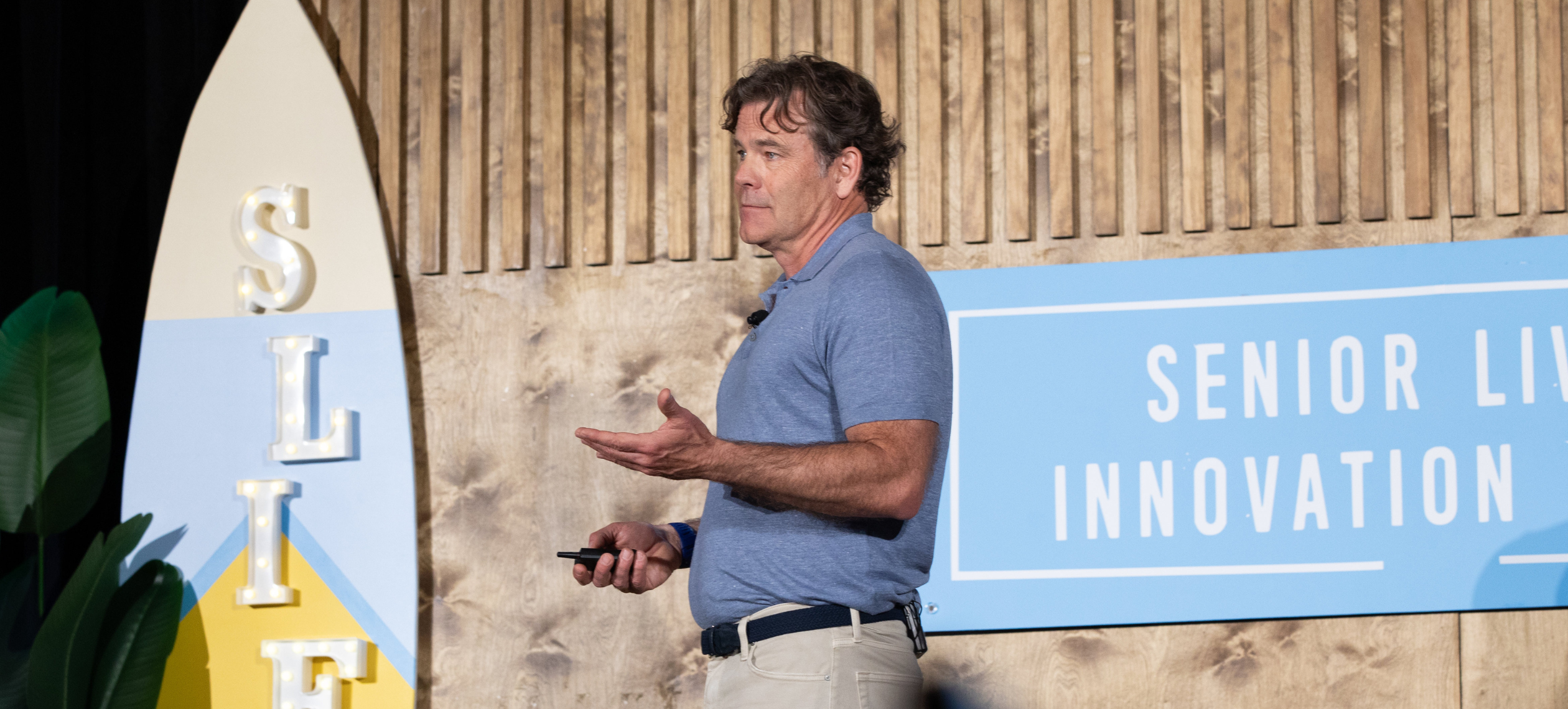
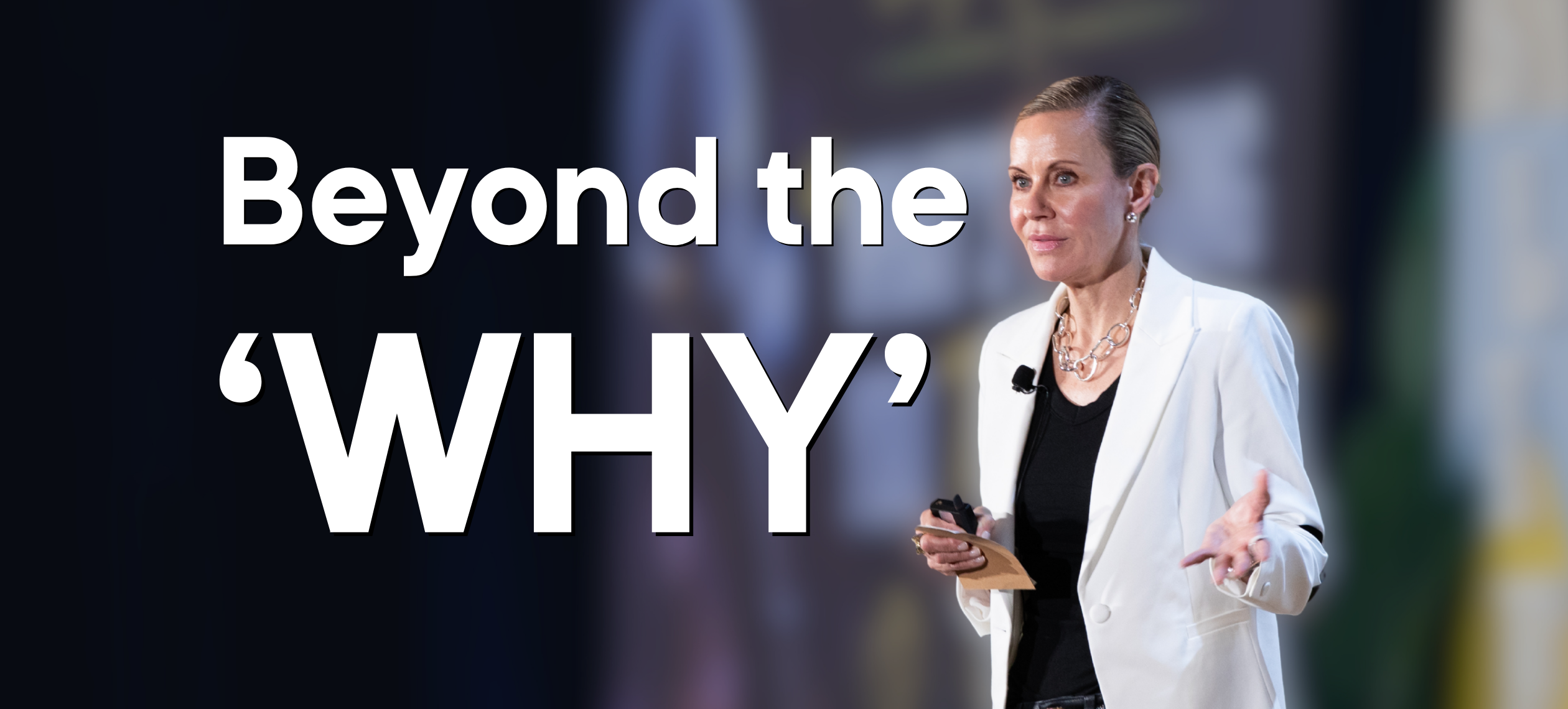
Serial entrepreneur and futurist Ben Lytle doesn't do small predictions. At the Senior Living Innovation Forum, he told the audience that the industry has a unique opportunity to solve a problem that’s been quietly building for decades: what happens when a growing population of older adults collides with a shrinking, less-experienced workforce.
But rather than framing that as a crisis, Lytle – the founding CEO of Anthem – sees it as something else entirely.
“You have this army of wisdom and life experience,” he said, referring to older adults. “And you have a smaller, younger generation that hasn’t matured as fast as we need them to. You can be the ones that bring them together.”
The Convergence Nobody Can Ignore
Lytle's framework for understanding this moment centers on a collision of forces. On one side, a set of deep demographic and societal shifts: declining birth rates, an aging population, a shrinking workforce, institutions that haven't kept pace with the people they serve. On the other, a set of technologies that are advancing faster than at any point in history: AI, brain science, virtual reality, biotechnology.
When those two forces collide, things speed up. Turbulence follows. And new realities get built.
Every major institution, from government to healthcare to education, is now viewed less favorably than it was 10 years ago. Lytle argues that's not really about politics or specific issues. It's about people sensing that the systems around them aren't evolving fast enough. "Individuals change quickly," he said. "Organizations change more slowly. Institutions change the slowest. When the gap gets wide enough, people lose confidence."
The result is anxiety, polarization, and a lot of noise. But Lytle's point was not to dwell on the turbulence. It was to see through it to the opportunity.
A Pivotal Moment for The Industry
Senior living, Lytle said, sits at the intersection of two of the defining tensions of the next decade: an abundance of older adults with wisdom, life experience, and a hunger for meaning, and a generation of younger people who, by almost every measure, are growing up slower than previous generations.
The reframe he pushed hardest on was the idea of what a senior living facility actually is. Right now, he said, too many people see it as the last door, a place you go to get sicker and die. What if it became the opposite? A place to find purpose, reach potential, and leave a legacy. "I think that's a powerful opportunity," he said. "And it's pivotal."
The Population Problem Has No Easy Answer
Lytle spent time on demographics because he thinks the industry, and most of society, hasn't fully reckoned with what's coming. Birth rates have been declining for 25 years. No country has successfully reversed the trend. And the consequences compound: fewer young workers, thinner tax bases, healthcare systems that can't recruit fast enough to replace the people retiring out of them.
His conclusion isn't pessimistic, but it’s clear. "We have to have productivity exceed the rate of population decline," he said. "The technologies we have, applied aggressively and not too late, we can do this. But if we don't, we could be facing recessions or worse." The window is real.
How We Learn Is About to Change Completely
In a typical classroom or group setting, the brain processes information at about 50 bytes/sec. In a genuine one-on-one conversation, where two people find common ground and start speaking shorthand, that speeds up to 150 to 200 bytes/sec. Now consider what AI makes possible: a fully personalized, one-on-one learning experience, available to anyone, in any language, at a fraction of the cost of a traditional education.
"AI is going to enable you to learn anything, anywhere, anytime, personalized to how you learn," Lytle said. He already has a digital version of himself that can teach his books in thirty-seven languages. The implications for workforce development, resident engagement, and intergenerational connection inside senior living communities are significant.
But AI isn't even the fastest way to learn, he argued. Doing something is three to four times faster than listening to someone explain it. And the fastest way of all has no cognitive process at all. It's the aha moment: the insight that arrives without warning and lodges itself permanently. Lytle's advice on those was unexpectedly practical: record every one. Write them down. Go back and review them. "Most people throw them away," he said. "Don't. They're coming for a reason."
From Knowledge to Wisdom
Lytle closed with what he described as the central question of the twenty-first century: not how do we accumulate more knowledge, but how do we develop the wisdom to use what we already have.
His definition of wisdom is straightforward: making the best possible decisions over a lifetime. It has two parts. The first is building the capacity to handle whatever comes at you, developing perspective, seeing reality clearly, staying free from the cognitive distortions that the ego creates. The second is being free enough in the moment of decision from emotion, bias, and instinct to actually act wisely.
And beneath that is an even bigger question that he thinks most people have never seriously asked: what actually makes us human? Because in a world increasingly surrounded by AI that looks, sounds, and acts human, the answer matters enormously. "Every person on this earth is going to have to decide," he said. "How do I integrate with intelligent automation in a way that enhances my humanity and doesn't degrade it? If we don't teach young people how to answer that question, we're in trouble."
For an industry that works every day with people at the most reflective stage of life, and that is increasingly being asked to prepare the next generation of workers and leaders, Lytle's parting thought landed with weight. "We're not bystanders," he said. "We are the architects of this new reality."
Watch the full talk below...
Posted by
SLIF heads to Amelia Island!
The One of a Kind Retreat for Senior Housing Leaders.
November 1-3 | Amelia Island, FL
Learn More
-Aug-19-2026-07-53-20-4908-PM.png)



Comments