Passive monitoring is at the top of many senior living operators' wish lists, but few have made it real. A recent Ziegler survey found that 82% of operators had no passive monitoring in place, and 36% planned to adopt something within the next year.
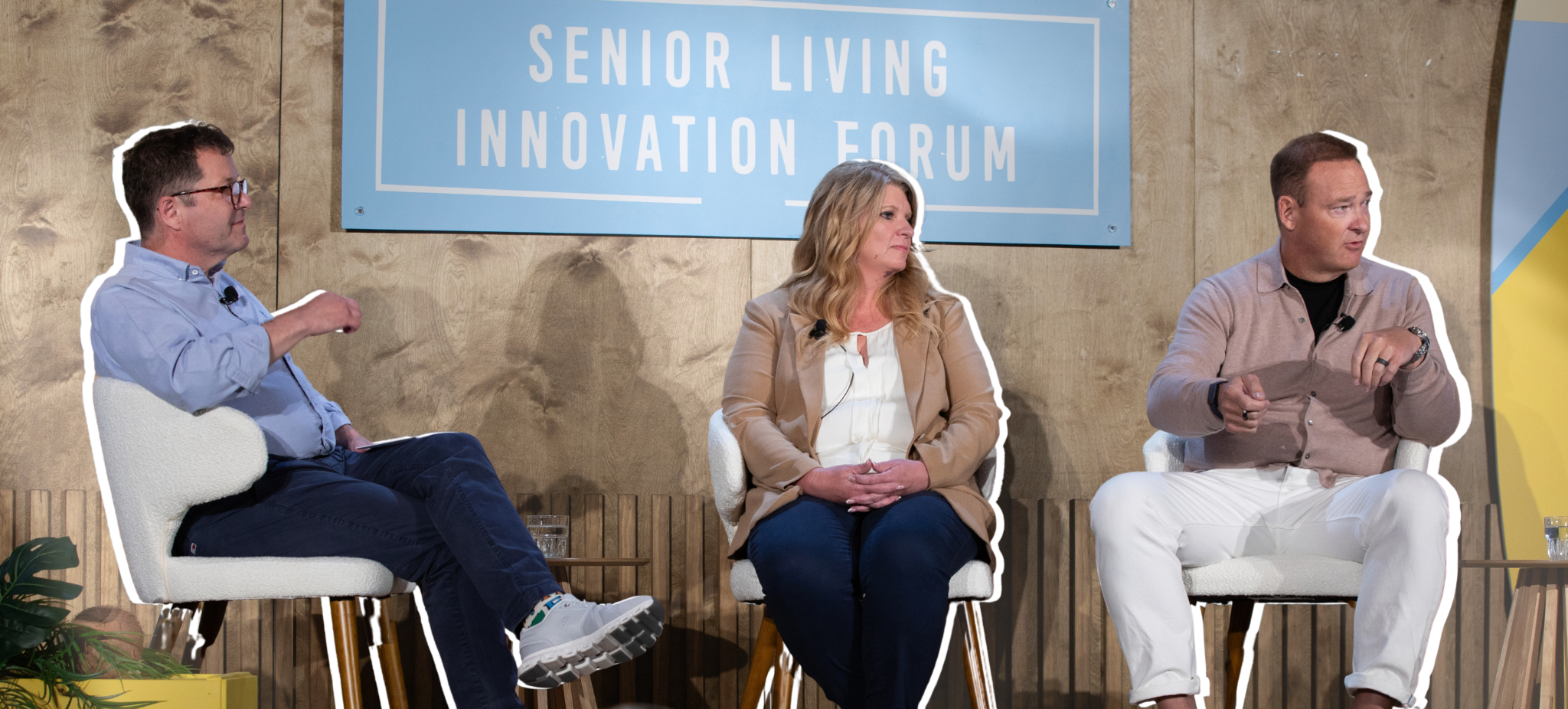
Americare didn't wait. At the Senior Living Innovation Forum, Stuart Hamilton, Founder and CEO of Amba led a conversation with Mary Eaves, Americare's senior VP of operations, and Dr. Kristopher Crawford, Partner and Co-Founder of Unity Transitional Care, and also an emergency physician and longtime remote patient monitoring leader, about rolling out roughly 7,500 sensors across 122 Americare facilities in five states.
Amba’s innovative technology integrated with Unity’s passive monitoring tools, and then dispersed to Americare’s clients shows how focused collaboration yields meaningful results.
Small Buildings, Tight Margins
Americare's communities are small, averaging about 25 assisted living units and 14 to 16 memory care units. That leaves fewer units to absorb fixed costs, so every new technology has to earn its place.
The team started with a three-community pilot in Tennessee. Eaves expected a fall sensor. Instead, the no-camera, no-wearable system tracked heart rate, breathing, nighttime activity and even when staff entered a room to respond. The early lesson was to personalize alert thresholds for each resident, since standard baselines triggered alarms when they shouldn't and stayed quiet when they should. The rollout also exposed Wi-Fi dead spots in older buildings, an upgrade AmeriCare needed anyway.
The Game Changer: Clinical Eyes and a Business Model
Scaling raised two questions: who would observe all that data, and how would AmeriCare pay for it? Crawford's remote patient monitoring service answered both.
With only one nurse or clinical supervisor per building, Americare gained a physician-led team as backup. Crawford meets every resident by video, with local nursing staff on hand to fill in details. His practice bills Medicare for monitoring, since residents keep their Medicare benefits in assisted living, and pays AmeriCare to use the data.
"It is just entirely a win for everyone," Crawford said, "but most importantly for the patients."
Stopping Tragedy Before It Starts
Crawford's interest grew from years in the ER, where he saw a simple urinary tract infection turn into sepsis, an ICU stay and a discharge to rehab instead of home. Passive monitoring flags that kind of decline many days earlier.
Eaves shared examples. Overnight pauses in one resident's heart rhythm led to a cardiologist visit and an outpatient pacemaker. When another family declined a pacemaker, staff adjusted their approach to be in the room as soon as the resident got up. Increased nighttime bathroom visits have caught UTIs early. For residents on hospice, slowing respirations alert staff so no one passes away alone.
Eaves recommended to attendees to start with a pilot at a few locations and win over your biggest skeptics. Her most hesitant clinical leader is now the program's loudest champion, she said.
Crawford urged operators to move now. Sensors and AI will only get more sophisticated, and staff who are already comfortable with today's tech tools will adapt far more easily to what comes next.
 REQUEST INVITE







-Aug-19-2026-07-53-20-4908-PM.png)
Comments